3PL vs In-House Fulfillment UAE: What’s Better for Your UAE eCommerce Business
Jubel
September 14, 2026
Introduction
If you’re running an eCommerce business in the UAE, in and around Dubai or Abu Dhabi, you’ve likely hit the dilemma whether you should outsource to a 3PL or keep your fulfillment in-house.
Well, you are not the only one. Whether you’re shipping beauty products, home goods, or electronics, there are many sellers like you who have constantly re-evaluated their fulfillment strategy. Why, you might be wondering? Factors including rising delivery expectations, storage costs, and regional logistics complexities, have made this decision more important than ever.
Afterall, it is the approach that you end up choosing that will eventually impact your customer experience, shipping timelines, and profit margins.
So, let’s walk you through both models and help you understand which route makes the most sense for your UAE business.
What Is 3PL Fulfillment?
Third-party logistics (3PL) is when a business outsources its storage, picking, packing, and shipping operations to an external fulfillment company.
In the UAE, 3PL providers like eShipper UAE can partner up with you as a seller to support you with effectively managing cross-border shipping, last-mile delivery, along with warehousing and fulfillment.
You can read more about how fulfillment centers are powering UAE eCommerce here.
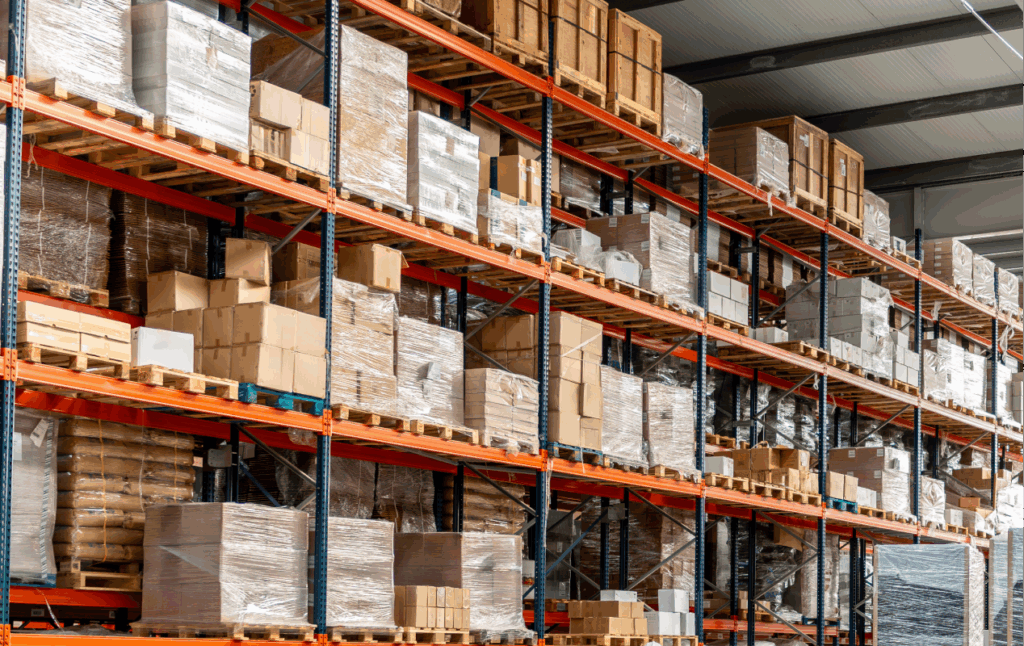
With 3PL, your inventory is stored in a shared or dedicated warehouse. When a customer places an order, the 3PL provider handles the fulfillment process on your behalf. You benefit from their expertise, technology, and delivery network, without the fixed overheads.
What Is In-House Fulfillment?
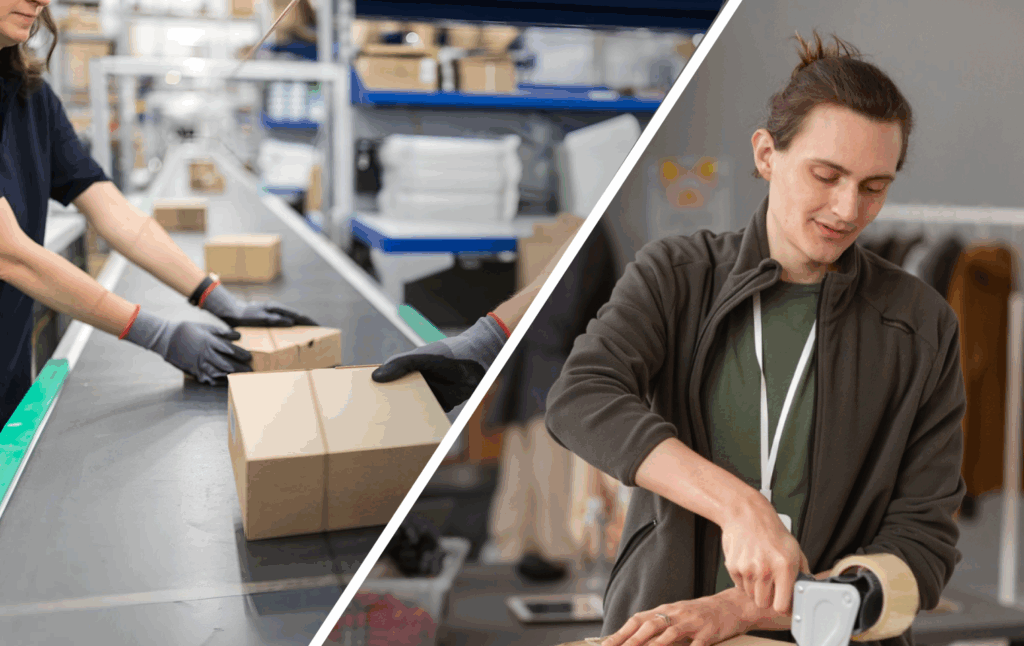
In-house fulfillment means you manage everything internally. This includes securing a warehouse, hiring staff, overseeing packaging, maintaining inventory systems, and negotiating with different carriers.
Some businesses in the UAE, particularly the established brands or niche sellers prefer in-house fulfillment because it gives them full control over operations. If you’ve already invested in infrastructure and team resources, this might seem logical.
But it’s important to ask yourself if this model is as profitable as you might be thinking, especially if you’re a growing business.
Can your team handle peak season surges especially during Black Friday, Ramadan sales, or GCC cross-border demand?
Key Factors to Consider When Comparing Fulfillment Models
To decide what’s right for your business, look at your operations through these key lenses:
Factor
3PL Fulfillment
In-House Fulfillment
Initial Investment
Low. No need for warehouse or staff.
High. Setup of warehouse, hiring, equipment.
Scalability
Highly scalable during peak season.
Limited by physical space and workforce.
Operational Control
Lower, but efficient with strong SLAs.
Full control over inventory and handling.
Shipping Speed
Faster through courier partnerships.
May take longer if manually handled.
Technology
Includes real-time tracking, dashboards.
Requires in-house tech setup.
Customization
May be limited.
Full flexibility.
Risk Management
Lower — less risk in operations.
Higher — reliant on internal processes.
When Should UAE Sellers Choose 3PL?
If you’re an eCommerce brand in Dubai or Sharjah and have a high delivery volume, outsourcing fulfillment in the UAE can help you stay on track, while also scaling fast.
Here’s when 3PL is the better choice:
You’re a small-to-mid-sized seller expanding into GCC markets: You don’t want to set up warehouses in every region, but you still want to meet delivery expectations in Saudi Arabia, Kuwait, or Bahrain. With 3PL, you plug into a cross-border-ready network.
Your orders fluctuate based on season or campaign: If your brand runs Ramadan or end-of-year campaigns, a 3PL provider like eShipper UAE can help you manage high volume deliveries without impacting your overall costs.
You want to focus on product and sales, but not logistics: Instead of hiring warehouse managers, managing delivery challenges, or negotiating rates from carrier, you can opt for an experienced partner to handle it all on your behalf.
You want built-in technology: eShipper UAE offers centralized dashboards, automated order syncing with your eCommerce platform, and real-time delivery visibility.
Learn more about our UAE logistics solutions for startups here.
When Is In-House Fulfillment the Better Fit?
In some cases, setting up an in-house warehouse may be worth it. This is usually when:
You’re shipping fragile or high-value goods that require customized packaging or handling: For instance, high-end electronics sellers in Dubai often prefer in-house operations to manage the unboxing experience.
You have very specific packaging or kitting requirements: If your products require bundling or promotional inserts, an in-house setup gives you more control.
You already have the infrastructure and manpower: If you’ve already invested in a warehouse and fulfillment team in Dubai, and your operations are stable, it may not make sense to outsource right away.
That said, you should keep an eye on your cost comparison between 3PL and in-house fulfillment. In-house costs include rentals, employee benefits, equipment maintenance, and delays.
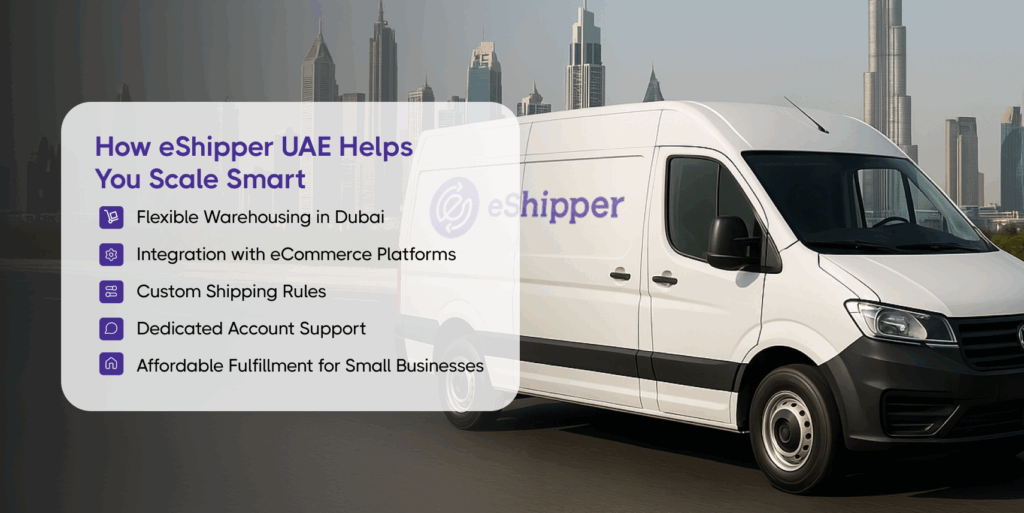
How eShipper UAE Helps Your Growing Business
At eShipper UAE, we work with eCommerce sellers of all sizes, from startups testing new markets to established brands shipping to Saudi, Qatar, and beyond.
Here’s what you can expect as a seller, when you work with us:
Flexible warehousing in Dubai with faster processing and smart inventory allocation.
Integration with Shopify, WooCommerce, Amazon UAE, and more.
Custom shipping rules, so your orders are automatically synced.
Sepcialized support that understands your pain points including complex cross-border documentation or managing peak season surges.
Affordable fulfillment for small businesses in the UAE through shared storage and competitive pricing options.
eShipper has helped brands fulfill in the UAE without losing control, while giving them the tools to compete with enterprise sellers. If you're wondering when is the right time to make the switch, it’s now.
Fulfillment is no longer just about storing boxes. It’s the backbone of your business which help you manage customer experience, keep your brand promise, while elevating your ability to grow beyond borders.
If you’re a new business or growing fast, 3PL gives you a more effective way to expand. If you’re a niche seller with specialized needs and internal capacity, in-house might still work.
The right choice is the one that helps you grow while you earn repeat customers.
It depends on your storage needs, order volume, and shipping destinations. Typically, sellers pay storage per pallet, plus pick-and-pack fees per order.
For most new UAE-based sellers, 3PL offers lower upfront costs, flexibility, and speed. It’s the ideal way to scale without risk to infrastructure.
It’s possible, but it requires significant time and capital. Most new businesses in the UAE prefer to outsource, to remain efficient.
For fast-growing brands or sellers with cross-border demand for products, a 3PL setup offers flexibility, tech integration, and delivery speed that’s hard to replicate in-house.
If your team is struggling with order volumes, delayed deliveries, or increased warehousing costs, it’s time to consider a 3PL.
Costs vary by providers and service levels but are often more predictable and scalable than in-house overheads.
Yes, there are multiple 3PL services that eCommerce brands in the UAE can use depending on a variety of factors including order volumes, the type of products they sell and the service levels they require for their business.
High fixed costs, labour management issues, limited scalability, and operational inefficiencies during peak periods.
While global 3PLs report high earnings, success should be measured by service quality, reliability, and regional expertise, and shouldn’t be just dependent on the revenue.
You have less direct control over fulfillment, and customization can be limited. That’s why it’s crucial to choose a 3PL partner that aligns well with your brand.
High costs, slow growth, and the constant need to manage staff, space, and operations internally.
3PL warehouse services vs 3PL shipping services in UAE: Learn which is a better model for your eCommerce business based on factors like cost, speed, and reliability.
Discover how 3PL services resolve top customer shipping complaints—from delays to damaged goods—while enhancing accuracy, returns, and overall satisfaction.
eshipperuae
4 mins read
We'll send more eCommerce insights, tips, and inspiration straight to your inbox.
Thank you for reaching out!
We have received your information and will get back to you soon.